

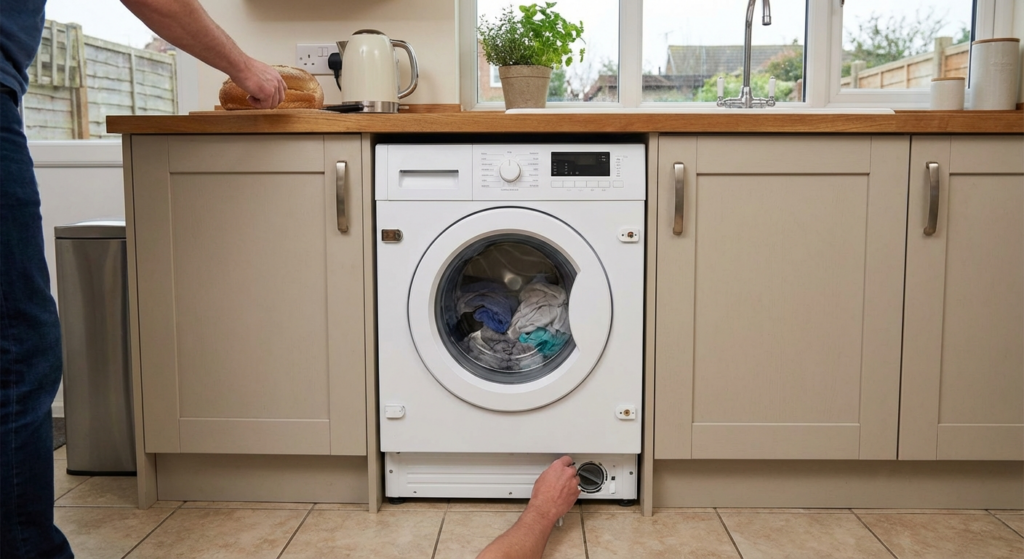
If your washing machine is not spinning, the most common causes are an unbalanced load, a blocked pump filter, or a kinked drain hose. Simply redistribute the wet clothes evenly inside the drum, check the filter for debris, and ensure the drain hose is completely clear.
Check for an Unbalanced Load First
Modern washing machines feature built-in weight sensors to detect uneven distribution and will completely refuse to spin if the load is unbalanced. This clever safety mechanism protects the appliance from excessive vibration and prevents serious internal damage from occurring during the cycle.
How to Balance Your Wash
Open the door and inspect your wet laundry to see if heavy items like thick bath towels have clumped together on one side. Simply redistribute the wet clothes evenly around the drum to balance the weight before running the spin cycle again.
Inspect the Drain Pump Filter
When a washing machine refuses to spin, a blocked drain pump filter is almost always the main culprit. The machine must drain all water before spinning, so clearing out trapped debris will usually resolve the issue and allow the cycle to finish.
Clearing a Blocked Filter
Place a shallow tray underneath the filter flap at the bottom of your machine to catch any trapped water before unscrewing the cap. Remove any loose change or fluff from the cavity before giving the filter a quick rinse under the tap.
Examine the Drain Hose
A kinked or crushed drain hose will trap water inside the drum and trigger a safety feature that stops your washing machine from spinning. Straightening the hose ensures the water can escape freely and allows the appliance to complete its washing cycle without any further interruptions.
Fixing Kinks and Blockages
Pull your washing machine slightly away from the wall to inspect the grey ribbed hose at the back for any sharp bends. If the hose is severely damaged or crushed, replacing it will instantly get your appliance working properly again.
Worn Out Carbon Brushes
Motor carbon brushes conduct electricity to the spinning drum but naturally wear down over time due to constant friction. Once these brushes become too short, the motor loses power and replacing them is the only way to restore full functionality.
Spotting Motor Issues
You might notice a slight burning smell or hear a clicking noise during the cycle when these carbon brushes finally fail. The machine will fill and drain normally but completely fail to rotate, which is a clear sign that the motor needs professional attention.
Faulty Drive Belt
A broken or slipping drive belt severs the vital connection between the motor and the drum, leaving the drum completely stationary while the motor runs. Fitting a new replacement belt is a highly effective repair that instantly fixes this specific spinning fault.
Checking the Belt Tension
You can test the belt tension easily by opening the door and spinning the empty drum with your hand to feel for resistance. If it spins far too easily without any drag, the belt has likely snapped and will need to be replaced.
When to Call the Professionals
While clearing a filter is an easy DIY task, electrical faults and internal motor repairs require the expertise of a qualified appliance engineer. Attempting complex repairs without the proper knowledge can be dangerous, so calling a local expert ensures your appliance is fixed safely.
Getting Your Appliance Sorted
Our friendly engineers at Anderson James carry a wide range of spare parts to get your washing machine spinning again on the very first visit. Book a repair with our local Wiltshire team today and banish those frustrating soggy laundry piles for good.