

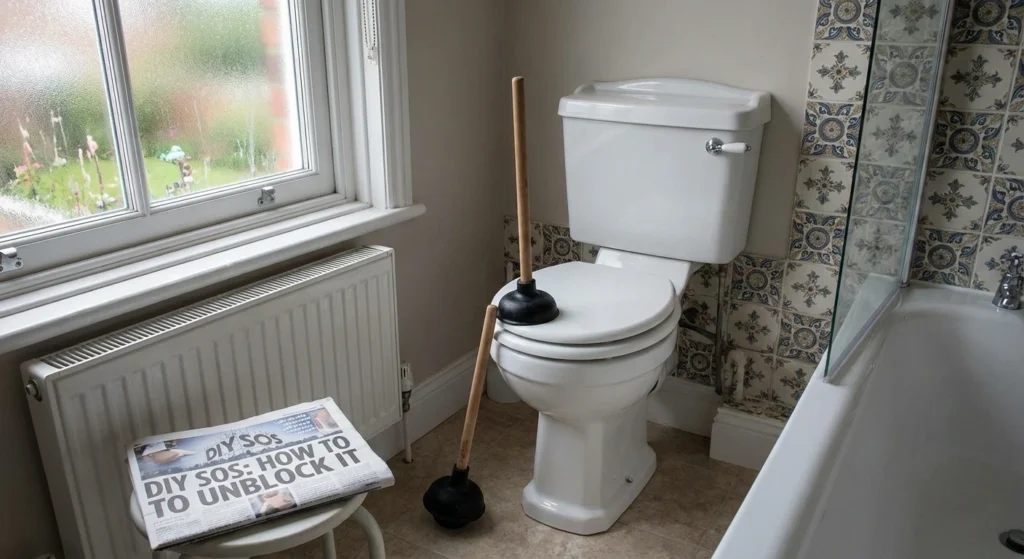
To unblock a toilet fast without a plumber, squirt half a cup of washing-up liquid into the bowl, followed by a bucket of hot water. Wait ten minutes for the soap to lubricate the pipes and break down the clog, then flush. Alternatively, use a flanged plunger for stubborn blockages.
The Hot Water and Washing-Up Liquid Trick
The quickest way to unblock a toilet using household items is the hot water and soap method. The washing-up liquid acts as a heavy lubricant to grease the pipes, whilst the hot water breaks down solid waste and toilet paper. This combination usually dislodges the blockage within ten minutes.
Nobody wants to deal with a bathroom disaster. If your toilet is looking dangerously full, do not flush it again. Let the water level drop naturally, or grab some rubber gloves and manually scoop some out into a bucket.
Next, squeeze a generous amount of washing-up liquid directly into the toilet bowl. Leave it to settle at the bottom for a few minutes.
Finally, pour a bucket of hot water from waist height into the bowl. Never use boiling water, as this can easily crack the porcelain and cause a massive leak. Let the soapy mixture sit for ten minutes before attempting a flush.
How to Use a Plunger Properly
To use a plunger properly, create a tight seal over the waste hole, push down gently to expel air, and then pull up sharply. Repeat this vigorous plunging motion for twenty seconds to dislodge the clog. The upward pull is what actually shifts the stubborn blockage out of the way.
Most people struggle with plunging because they simply push down as hard as they can. You need to establish a rhythm of forceful pushes and sharp pulls.
Start by inserting the plunger at an angle so the cup fills with water rather than air. This gives you far more hydraulic pushing power to shift the mess.
Once you have finished plunging, flush the toilet to check the drainage. If the water vanishes smoothly, you have successfully cleared the pipe and saved the day.
Choosing the Right Plunger
To choose the right plunger for a toilet, always select a flanged plunger rather than a traditional flat cup plunger. The extra rubber flap on a flanged plunger fits perfectly into the toilet drain, creating the necessary airtight seal that flat plungers simply cannot achieve.
A standard cup plunger is designed exclusively for flat surfaces like kitchen sinks or baths. Using one in a curved toilet bowl will just result in frustrating and messy splashes.
Warm the rubber flange of your plunger under hot water for a minute before using it. This softens the material and helps it mould perfectly to the unique shape of your toilet bowl.
The Baking Soda and White Vinegar Method
To unblock a toilet with baking soda and vinegar, pour one cup of baking soda into the bowl, followed by two cups of white vinegar. The chemical reaction creates a fizzing action that naturally breaks down soft blockages. Leave the mixture to work for thirty minutes before flushing away.
This is a fantastic eco-friendly alternative to harsh chemical unblockers. It works incredibly well on organic blockages and excess amounts of toilet paper.
You will see the mixture start to fizz and bubble immediately. Do not panic, as this is exactly what you want to happen. The expanding bubbles help to eat away at the grime holding the clog together.
If the toilet is still draining slowly after thirty minutes, follow it up with a kettle of hot water. This gives the loosened blockage a final push through your waste pipe.
Cling Film Hacking Your Toilet
To unblock a toilet using cling film, cover the toilet bowl completely with three layers of strong cling film to create an airtight seal. Flush the toilet, and as the trapped air causes the film to balloon upwards, push down firmly on the bubble to force the blockage out.
This is a brilliant trick if you do not own a plunger and want to avoid splashing. It cleverly uses the water pressure from the flush to create a powerful vacuum.
Make sure the porcelain rim is completely dry before you start wrapping. If the rim is wet, the cling film will not stick and the airtight seal will fail.
Pushing down on the ballooned plastic acts exactly like a giant plunger. Just be careful not to push so hard that you pierce the film, or you will end up with a very messy bathroom.
When to Call a Professional Plumber
You should call a professional plumber if your toilet remains blocked after trying multiple DIY methods, or if the water level refuses to drop. Persistent blockages, foul smells, or gurgling sounds from other drains indicate a deeper issue in your main sewer line that requires expert attention.
Sometimes a blockage is just too stubborn for hot water and plunging. This is usually the case if something solid, like a child’s toy or a heavy sanitary product, has been accidentally flushed.
If you have tried everything and the water still will not drain, it is time to admit defeat. Continuing to flush a completely blocked toilet will only result in raw sewage flooding your lovely bathroom floor.
Our team at Anderson James can quickly diagnose and clear severe blockages without any fuss. We have the specialist tools and local Wiltshire expertise to get your plumbing flowing perfectly again.