

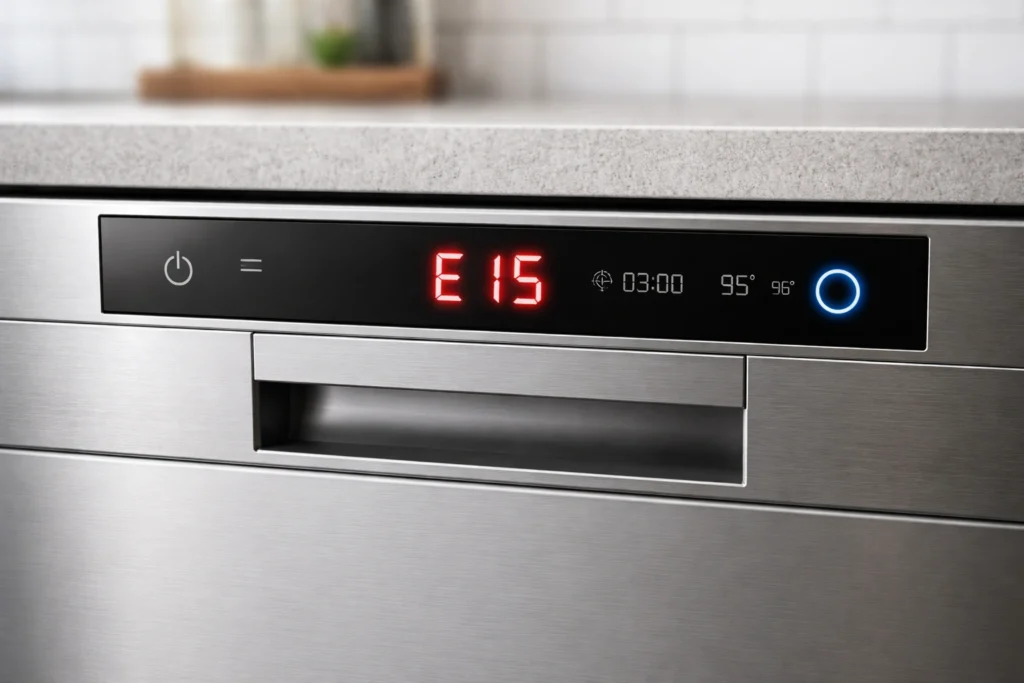
Nothing ruins a relaxing evening quite like a flashing error code on your kitchen appliance. You load up your plates, press start, and walk away expecting sparkling results. Instead, your trusty machine stops dead and flashes the dreaded E15 code at you.
It feels frustrating when you just want the washing up sorted. But do not panic just yet. This specific alert is actually one of the most common issues we see in local homes.
As Wiltshire’s trusted appliance repair experts, we deal with this problem all the time. Our local engineers know these machines inside and out. We are here to guide you through exactly what this alert means and how to tackle it.
By the end of this guide, you will know whether it is a quick home fix or time to call in the professionals. Grab a cup of tea, and let’s dive into the world of Bosch dishwashers.
Introduction to the Dreaded E15 Error Code
We have all been there at some point. The kitchen is finally tidy, the sides are wiped down, and you press the start button. Then, the machine emits a sad beep and refuses to cooperate.
The digital display lights up with an E15 warning. It sounds highly technical and slightly intimidating. You might even hear a constant humming noise coming from the machine.
This humming is actually the drain pump working overtime to protect your kitchen. The machine locks itself down and will not let you start a new cycle. It is annoying, but it is happening for a very good reason.
What Exactly Does the E15 Error Code Mean?
If you are staring at an E15 code, your machine is simply trying to protect your home. This specific code means that the dishwasher has detected water in its bottom base pan. It is a brilliant built-in safety mechanism designed to stop your kitchen from flooding.
When water leaks into the bottom tray, it activates a clever little sensor. Once this sensor is triggered, the machine halts all normal washing operations immediately. It will stubbornly refuse to run a cycle until the area is dry again.
This safety feature is a fantastic piece of engineering. However, it can also be incredibly frustrating when you have a mountain of dirty dishes waiting. The good news is that the machine has successfully done its job by stopping a potential flood.
The Hidden Anti-Flood System
Modern dishwashers are packed with smart technology to keep your property safe. The anti-flood system sits right at the very bottom of your machine. It is usually hidden away behind the front kickplate near the floor.
This system consists of a small polystyrene float and a delicate microswitch. When everything is working perfectly, this base pan is completely bone dry. But if water starts to drip down from the main tub, it pools in this lower basin.
As the water level slowly rises, it lifts the lightweight polystyrene float upwards. It acts just like a buoy bobbing on the sea. Once the float reaches a certain height, it pushes against the microswitch.
How the Microswitch Operates
That tiny physical click is all it takes to trigger the E15 alert on your digital display. The microswitch sends an immediate electrical signal to the main control board. The control board then springs into action to prevent a disaster.
It immediately stops drawing in any fresh water from your mains supply. At the same time, it turns on the drain pump to remove any sitting water from the main tub. This constant pumping is why you hear that continuous humming noise.
The drain pump will keep running to ensure no more water escapes onto your beautiful laminate floors. It is a fantastic defence against severe water damage. But unfortunately, the sensor cannot tell you exactly where the original leak is coming from.
The Main Causes of a Bosch E15 Error
So, we know that water is getting into the base pan. But how exactly is it getting down there in the first place? There are several common culprits that lead to this pesky fault.
Some causes are incredibly simple and easy to resolve yourself. Other causes point to a mechanical failure that requires a professional engineer. Let’s explore the most frequent reasons your machine is unhappy.
Using the Wrong Dishwasher Detergent
This is surprisingly one of the most common causes we see. Using cheap or incorrect detergent can create a massive amount of foam inside the tub. Standard washing up liquid should never go anywhere near a dishwasher for this exact reason.
Excessive suds expand rapidly and force their way past the door seals. These bubbly leaks slowly drip down into the base pan. Eventually, the bubbles turn back into water and trigger the float switch.
Always stick to high-quality dishwasher tablets or specifically designed liquids. It is a simple swap that can save you a lot of hassle.
Overdosing on Rinse Aid
Rinse aid is fantastic for getting those wine glasses perfectly streak-free. However, pouring too much into the dispenser can cause unexpected issues. Spilled rinse aid creates extreme foaming during the wash cycle.
Just like with the wrong detergent, these excessive bubbles expand and escape the main tub. They seep down the sides and pool in the hidden base tray. If you spill rinse aid while filling the dispenser, always wipe it up immediately with a damp cloth.
Blocked or Dirty Filters
Your dishwasher works hard to blast leftover food particles off your plates. All of that grime has to go somewhere, and it usually ends up in the filter. If you do not clean your filter regularly, it becomes completely clogged.
When the filter is blocked, water cannot drain away quickly enough during the wash cycle. The water level rises higher than it should inside the tub. This high water can easily breach the bottom door seal and leak into the safety pan.
A Worn or Dirty Door Seal
The rubber gasket around your dishwasher door keeps all the hot water safely inside. Over time, this seal can collect grease, grime, and food debris. If the seal is dirty, the door cannot shut flush against the machine.
This tiny gap is more than enough for water to trickle out during a powerful wash. In older machines, the rubber seal might actually become brittle or torn. If the seal is physically damaged, it will certainly need to be professionally replaced.
Blocked Spray Arms
The spinning spray arms rely on tiny holes to blast water around the tub. If bits of food or hard water limescale block these holes, the water pressure changes. The water might start spraying directly at the door seal instead of the dishes.
Constant, high-pressure water shooting straight at the rubber gasket will eventually cause a leak. This rogue water travels down the front of the machine and straight into the base pan. Keeping those spray arms clear is crucial for a healthy machine.
Faulty Water Inlet Valve
The water inlet valve is the gateway between your mains plumbing and the dishwasher. It opens and closes electronically to let the exact right amount of water in. If this valve becomes faulty, it might weep water constantly.
Even a tiny drip from a failing valve will eventually fill up the base pan. This is a common wear-and-tear part that degrades over years of heavy use. Replacing it requires opening up the machine and working with the internal plumbing.
Damaged Sump Basin or Seals
The sump is the large plastic basin at the bottom of the tub where the water collects to drain. It is sealed to the metal tub with a large rubber O-ring. Years of hot water and harsh detergents can cause this specific seal to degrade.
If the sump seal fails, water drips directly from the main washing area down into the electrical base. This is a tricky leak to spot without taking the machine apart. It usually requires a professional appliance engineer to properly diagnose and fix.
Kinked or Leaking Hoses
Your machine relies on a network of hoses to move water around. You have the mains inlet hose, the drain hose, and various internal circulation pipes. If the machine has been pushed back too hard against the wall, a hose might become kinked.
A kinked drain hose causes water to back up and overflow. A split or damaged hose will simply spray water directly into the base of the machine. Inspecting the hoses is a vital part of any troubleshooting mission.
Safe DIY Fixes You Can Try at Home
Before you pick up the phone to book a repair, there are a few safe things you can try. Sometimes the E15 error is just a temporary glitch caused by a foamy tablet. You might be able to clear it yourself in just a few minutes.
Remember to always put your safety first when dealing with electrical appliances. Before attempting any of these steps, make sure the dishwasher is completely turned off. You should unplug it from the wall or isolate it at the main fuse board.
The Famous Dishwasher Tilt Trick
If you search online for the E15 error, you will undoubtedly read about the tilt trick. It is a quick way to empty the base pan and unstick the safety float. First, ensure the machine is completely disconnected from the power supply.
Carefully pull the dishwasher out from under your kitchen worktop. Get a couple of old towels and lay them on the floor behind the machine. Gently tilt the entire dishwasher backwards at a 45-degree angle.
You should see water run out onto the towels from the hidden base pan. Hold it there until the water stops dripping, then stand it back up. Once the pan is dry, the float switch drops down, and the error code should vanish.
Please note: whilst this trick does effectively clear the water, there is a high risk that you could end up causing damage to the electronics of the machine (many of which are housing in this space at the base of the machine. We therefore do NOT recommend this procedure, nor do we use it ourselves.
Clearing the Filter System
While the machine is out of action, it is the perfect time to check your filters. Open the door and twist the cylindrical filter located at the bottom of the tub. Pull it straight up and out of the machine.
Take it to the kitchen sink and give it a thorough scrub with warm soapy water. Use an old toothbrush to gently remove any stubborn grease from the fine mesh. Pop it back into the machine and ensure it locks securely into place.
Wiping Down the Door Seals
Grab a damp microfibre cloth and add a tiny drop of mild washing up liquid. Carefully wipe all the way around the rubber door seal. Pay special attention to the very bottom edge where grime tends to collect invisibly.
You will be amazed at how much black sludge comes off onto the cloth. A clean seal ensures a perfectly watertight close when you shut the door. Never use harsh chemical bleach on these seals, as it will rot the rubber.
Unblocking the Spray Arms
Both the upper and lower spray arms can usually be easily removed by hand. Give them a gentle pull or unscrew the central locking nut. Take them to the sink and inspect the tiny water exit holes.
If you spot any trapped apple pips or limescale buildup, carefully poke them out. A wooden toothpick is the perfect tool for clearing these delicate holes. Rinse water through the arm to ensure it flows freely before reattaching it.
Checking for Excess Suds
If you open the door and see a winter wonderland of foam, you have found your problem. You need to get rid of those suds before trying to run the machine again. Scoop out as much foam as you can with a plastic jug.
Pour a splash of cooking oil into the bottom of the tub. The oil instantly breaks down the suds and kills the foam. Run a quick rinse cycle to flush everything safely away down the drain.
The Dangers of Ignoring an E15 Error
It can be tempting to just keep doing the tilt trick every time the error appears. If it gets the machine running again, why bother fixing it properly? The truth is, ignoring a persistent E15 code is a recipe for disaster.
The anti-flood system is warning you that water is escaping from where it should be. If you keep bypassing this safety feature, the underlying leak will only get worse. Here is why you must take the warning seriously.
Hidden Water Damage to Your Kitchen
Water might only be dripping into the dishwasher base right now. But eventually, that base pan will overflow completely. The water will silently creep under your expensive kitchen cabinets.
By the time you notice the water on your floor, the damage is already done. Laminate flooring swells and warps, and wooden plinths begin to rot away. Fixing water damage in a fitted kitchen is incredibly expensive and highly disruptive.
Potential Electrical Hazards
Water and electricity are a famously terrible combination. The base pan of your dishwasher houses all the sensitive electronic components. It contains the main control board, the heater, and various live wiring harnesses.
If water repeatedly splashes onto these parts, it can cause a severe short circuit. This will instantly fry the expensive control board, turning a small repair into a write-off. In the worst-case scenario, it could even trip your entire household electrics.
Mould and Unpleasant Odours
Sitting, stagnant water inside the dark base of a warm appliance is a breeding ground for bacteria. If the leak is not repaired, mould will quickly start to grow inside the machine casing. This leads to a persistent, damp, and musty smell in your kitchen.
Every time you run the machine, the heat will amplify that terrible odour. You want your kitchen smelling of fresh cooking, not a damp cellar. Getting the leak professionally stopped is the only way to banish the smell.
When to Call a Professional Appliance Engineer
The DIY tilt trick is great for clearing a temporary suds issue. However, if the error code comes back a few days later, you have a physical leak. This is the exact moment you need to call in a professional appliance engineer.
Modern dishwashers are incredibly complex pieces of machinery. They require specialist tools, diagnostic software, and years of hands-on experience to fix safely. Let’s look at when you should definitely leave it to the experts.
The Error Keeps Coming Back
If you have cleaned the filters and checked the seals, but the code remains, do not force it. A recurring E15 error guarantees that a part inside has failed. It could be a hairline crack in the sump or a split circulation hose.
Finding a tiny drip inside a dark, cramped appliance is like finding a needle in a haystack. Our engineers have the experience to spot these obscure leaks almost immediately. We know exactly where these specific Bosch machines tend to fail.
Internal Parts Need Replacing
If your water inlet valve or heat pump is leaking, it needs replacing. Sourcing the correct, genuine Bosch parts online can be a minefield for consumers. You might easily end up buying a cheap imitation part that fails again within weeks.
Professional engineers carry fully stocked vans with genuine, high-quality spare parts. We can strip the machine down, fit the new part, and test it safely. This ensures your appliance is completely watertight before it goes back under the counter.
You Suspect a Mains Plumbing Issue
Sometimes the leak isn’t actually coming from the dishwasher itself. The mains water tap connecting the hose might be weeping under the sink. Or perhaps the waste pipe connection has wiggled loose over time.
Because we specialise in both appliance repairs and general plumbing, we can fix the whole system. We can replace worn isolation valves or clear stubborn sink blockages affecting your machine. It is a complete, stress-free service for your kitchen.
Why Choose Anderson James for Your Repair?
When your appliance breaks down, you want it fixed quickly and without any hidden costs. Here at Anderson James, we have over eight years of experience repairing domestic appliances. We are a genuinely local, family-run business covering the beautiful Wiltshire area.
We know how much a broken dishwasher disrupts your daily family routine. That is why we work incredibly hard to provide an exceptional level of customer service. Here is why we are the right people to call when your machine flashes E15.
Quick and Local Wiltshire Service
Because we are entirely local, we can attend to your faulty appliance fast. We usually offer same or next working day appointments to get you sorted. Our engineers even call when they are on their way, so you are not trapped at home waiting.
We cover almost all of Wiltshire, from Chippenham and Calne down to Trowbridge and Devizes. You are supporting a local business that genuinely cares about its local community. We are not a faceless national call centre.
Transparent Fixed-Fee Pricing
Having a broken appliance is stressful enough without worrying about an escalating hourly bill. That is why we keep our pricing brilliantly simple and completely transparent. We charge a one-off fixed fee for our labour.
This fee covers our time completely, regardless of whether the repair takes one hour or three. If we need to order a special part and come back, there are no extra labour charges. You simply pay for the spare part separately, with absolutely no nasty surprises.
A Six-Month Guarantee for Peace of Mind
We believe in doing the job correctly the very first time. Once we have repaired your Bosch dishwasher, we give you a comprehensive six-month guarantee. This provides you with ultimate peace of mind long after we have left.
This guarantee covers the exact same fault returning. It also fully covers any parts which we have supplied and fitted for you. You can trust that our repairs are built to last.
Helping the Environment Through Repair
Over 100,000 tonnes of waste electricals end up at UK landfills each year. It is a staggering amount of waste that harms our environment. By choosing to repair rather than replace, you are actively doing your bit for the planet.
A simple hose replacement can give your machine another five years of life. It is significantly cheaper for your wallet and dramatically better for the earth. Together, we can make a massive difference to local waste reduction.
Preventative Maintenance for Your Bosch Dishwasher
Once your machine is running perfectly again, you want to keep it that way. A little bit of routine maintenance goes a very long way in the appliance world. By treating your machine kindly, you drastically reduce the chance of future error codes.
Taking five minutes a month to care for your dishwasher will extend its lifespan by years. Here are our top professional tips for keeping your Bosch appliance in top condition.
Scrape Your Plates, Do Not Rinse
There is a huge debate in households about whether to rinse plates before loading. The definitive answer from appliance engineers is to simply scrape them. Use a fork to scrape solid food into the bin, but leave the sticky sauces.
Modern detergents actually need grease and grime to activate their cleaning enzymes properly. If you put pre-rinsed, practically clean plates in, the detergent creates excessive suds instead. As we now know, those excess suds are a fast track to an E15 error.
Run a Regular Hot Cleaning Cycle
Dishwashers spend their lives cleaning, but they also need to be cleaned themselves. Grease and fat from your cooking slowly build up inside the hidden pipes. Once a month, you should run the machine completely empty on its hottest intensive cycle.
You can pop a proprietary dishwasher cleaning bottle upside down in the cutlery basket. This hot wash melts away all the hidden fat and limescale. It keeps the internal hoses clear and prevents nasty leaks from forming.
Keep Your Rinse Aid Topped Up Properly
We mentioned earlier that spilling rinse aid causes issues. However, ensuring the reservoir has just the right amount is crucial for drying performance. The machine relies on this liquid to sheet water off your plates efficiently.
Use a small funnel when topping up to avoid messy spills. If your glasses are coming out cloudy, you might need to adjust the dosage setting. Check your user manual to find the perfect dial setting for your specific model.
Manage Wiltshire Hard Water with Salt
Here in Wiltshire, we are famous for having incredibly hard water. This hard water wreaks absolute havoc on heating elements and internal pumps. Limescale acts like concrete inside your machine, blocking valves and causing devastating leaks.
You must ensure your dishwasher salt reservoir is always topped up. This specialist salt softens the water before it enters the main washing tub. It is the single most important thing you can do to protect appliances in this county.
Common Misconceptions About Dishwasher Care
There is a lot of bad advice floating around on the internet regarding household chores. Some of these myths actually cause direct harm to your expensive appliances. Let’s clear up a few of the most persistent misunderstandings we hear on our travels.
Knowing the truth helps you operate your machine safely and efficiently. It also stops you from accidentally voiding your manufacturer’s warranty.
Dishwashers Clean Themselves
Many people assume that because the machine blasts hot, soapy water around, it self-cleans. Sadly, this is a total myth. The machine is a master at removing dirt from plates, but it traps that dirt inside its filters.
If you never manually clean the filters or wipe the door seals, the machine will eventually choke. A neglected machine has to work twice as hard to push water around. This extra strain leads to premature part failures and unexpected leaks.
More Detergent Means Cleaner Plates
If your plates are coming out dirty, it is tempting to chuck in two tablets instead of one. This is terrible for your machine and will almost certainly trigger the E15 code. More detergent just equals more uncontrollable foam.
If your dishes are dirty, it is usually because the spray arms are blocked. It could also mean the water is not heating up to the correct temperature. Sticking to the recommended detergent dose is always the best policy.
All Dishwashers Are Exactly the Same
While they all wash dishes, the internal engineering varies wildly between brands. Bosch machines are brilliantly designed and use very specific heating pump technologies. You cannot simply use a universal spare part and hope for the best.
This is why it is so important to use engineers who know your brand. We have over eight years of experience working specifically with Bosch, Neff, Siemens, and many more. We understand the unique quirks of their anti-flood systems.
Understanding Bosch Error Codes Generally
The E15 is famous, but it is certainly not the only code your machine can display. Modern appliances are effectively small computers designed to self-diagnose faults. While they look scary, these codes are actually a technician’s best friend.
Instead of guessing what is wrong, the machine tells us exactly where to look. It saves hours of diagnostic time and gets your appliance fixed much faster.
Why Error Codes Are Actually Helpful
Imagine trying to fix a car that simply will not start, with no clues given. It would take days to test every single component. Error codes cut straight through the guesswork.
If a Bosch machine flashes E15, we know instantly that water is in the base. It tells us exactly which panels to remove and which safety switch to test. It turns a frustrating breakdown into a structured, logical repair process.
Other Common Codes You Might See
Alongside the E15, you might occasionally see an E24 or E25 code on the display. These codes relate to the machine struggling to pump water out down the drain. It usually points to a blocked sink waste or a jammed drain pump impeller.
An E09 code is another frequent visitor, indicating a failure with the water heating matrix. Whatever the code, our engineers carry the right parts to resolve the issue. You do not need to memorise them; you just need to give us a call.
The Environmental Impact of Repairing Appliances
We briefly touched on the environment earlier, but it is a topic close to our hearts. The throwaway culture of the last few decades has been a disaster for the environment. White goods are heavy, full of plastics, and require massive amounts of energy to manufacture.
When you throw away a dishwasher because of a simple E15 leak, the environmental cost is huge. The machine sits in a landfill, while a brand-new one is shipped halfway across the world.
Keeping White Goods Out of Landfill
Repairing a fault is the ultimate form of recycling. By fixing a leaking hose or replacing a microswitch, the entire metal chassis is saved. All the complex circuit boards and heavy motors continue to be useful.
We are incredibly proud of the fact that our repairs save tonnes of metal from being crushed. We responsibly recycle any small waste parts we do remove. It is a much more sustainable way to manage household breakdowns.
Saving Money While Saving the Planet
The brilliant thing about repairing is that it aligns environmental benefits with financial ones. A new, high-quality Bosch dishwasher will easily cost several hundred pounds. It also requires the hassle of fitting and disposing of the old unit.
A repair with Anderson James is a fraction of the cost of buying new. Our fixed labour fee means you remain completely in control of your budget. You get a perfectly working machine, and the planet gets a break.
Frequently Asked Questions About the E15 Code
When customers call us, they often have the same few questions about this specific fault. We like to be as transparent and helpful as possible. Here are the answers to the most common queries we receive about the E15 code.
Hopefully, these answers will ease your mind if your machine is currently flashing. Knowledge is power when it comes to dealing with household appliances.
Is it safe to use my dishwasher if the E15 error clears?
If you did the tilt trick and the machine is running again, you can cautiously use it. Just be aware that if there is a real leak, the error will inevitably return. You must keep a very close eye on the machine during the next few cycles.
Do not put the machine on and go out to the shops or go to bed. If a hose suddenly splits entirely, you want to be awake to turn the water off. If the code comes back, stop using the machine and call an engineer immediately.
How long does a Bosch dishwasher usually last?
Bosch is a premium brand known for excellent build quality and reliability. With proper maintenance and regular filter cleaning, a Bosch dishwasher should easily last 10 to 12 years. Many machines run perfectly for even longer than that.
Getting a repair done at the 5-year mark is completely normal and highly economical. It is simply routine maintenance for a hard-working appliance. There is absolutely no need to scrap a machine just because a rubber seal has worn out.
Will a standard reset clear the E15 fault?
Holding down the start button to reset the machine will not clear an E15 error. The anti-flood microswitch is a physical, mechanical switch triggered by actual water. Electronic resets cannot override this vital physical safety barrier.
The only way to clear the code is to physically remove the water from the base pan. You either have to wait days for it to evaporate or tilt the machine to drain it. Once the float drops back down physically, the machine will allow you to reset the board.
Final Thoughts on Keeping Your Kitchen Running Smoothly
We understand that appliance breakdowns are incredibly annoying. The Bosch E15 error is designed to stop a bad situation from becoming a flooded disaster. While it is frustrating to see, it proves your machine is actively protecting your home.
We are experts in domestic wet appliances and general plumbing. Please note that while we handle dripping taps and washing machines, we do not offer boiler repairs or fix refrigeration appliances. However, when it comes to dishwashers, our expertise is truly unmatched in the local area.
If you are struggling with a persistent error code, do not suffer in silence. Our friendly, local team is ready to get your kitchen back to normal. Book your repair today online or over the phone, and let Anderson James handle the hard work.