

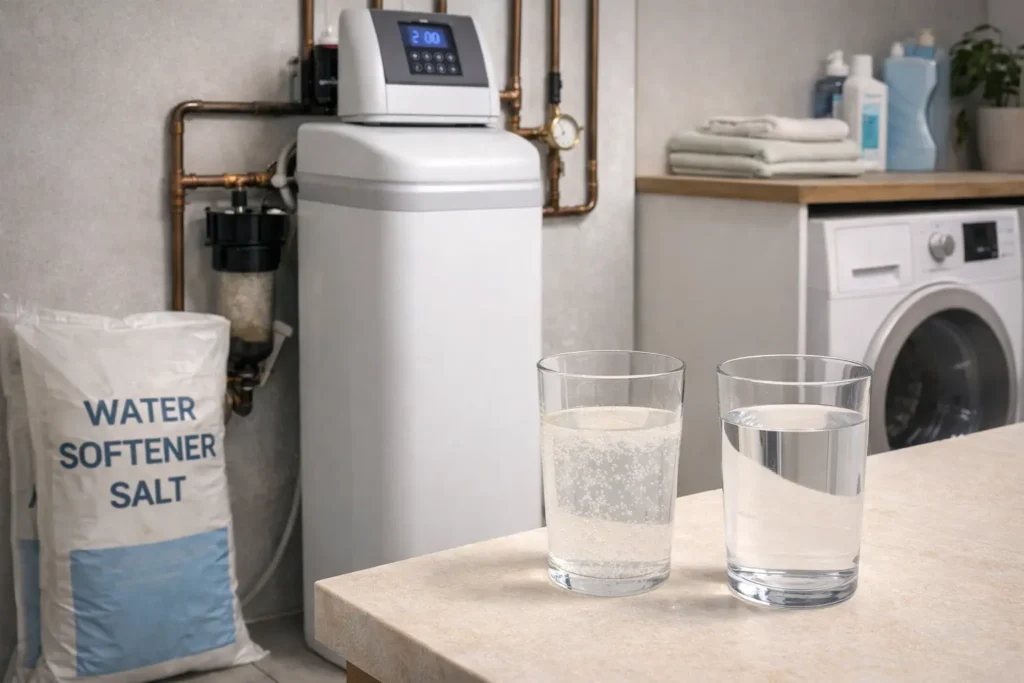
The Ultimate UK Guide to Water Softeners
Tired of battling chalky white marks on your nice clean taps? You are certainly not alone in this frustrating daily fight. Over 60% of households in the UK are located in hard water areas. Installing a water softener is the ultimate way to beat the dreaded limescale for good.
What Exactly Is a Water Softener?
A water softener is a clever filtration system that removes hard minerals from your home’s water supply. It specifically targets calcium and magnesium, which are the main culprits behind hard water. By filtering out these minerals, you get silky, soft water flowing from every tap in your house.
How Ion Exchange Works
Most standard water softeners use a brilliant process called ion exchange. Hard water flows through a tank filled with negatively charged resin beads. These beads attract and trap the positively charged calcium and magnesium minerals, swapping them out for sodium ions.
Salt-Based vs Salt-Free Systems
When shopping around, you will quickly notice two main types of systems on the market. Traditional salt-based softeners are the most popular and physically remove the hard minerals entirely. Salt-free systems are technically conditioners that alter the minerals to stop them sticking to pipes, but they do not provide a true soft water feel.
The Brilliant Benefits of a Water Softener
Making the switch to soft water comes with some fantastic perks for your household. It is one of the few home upgrades that can genuinely pay for itself over time. Let us look at why so many UK homeowners are making the permanent switch.
Banish Limescale for Good
Hard water leaves a stubborn, chalky residue known as limescale on your beautiful fixtures. Softened water completely eliminates this frustrating issue from your daily routine. You will spend far less time scrubbing shower screens, taps, and bathroom tiles.
Softer Skin and Shinier Hair
Hard water is notorious for stripping natural moisture from your skin and hair. It also stops soap from lathering properly, meaning you have to use more product just to get clean. Soft water feels much gentler and leaves you feeling genuinely refreshed after a daily shower.
Protect Your Home’s Plumbing
Limescale does not just look ugly; it causes serious hidden damage to your pipes. Over time, mineral buildup restricts water flow and reduces the overall efficiency of your plumbing system. Removing these hard minerals helps your pipes stay clear and perfectly functional for years to come.
How Much Does a Water Softener Cost in the UK?
Budgeting for a water softener involves looking at both the upfront price and the long-term running costs. Thankfully, the investment is usually very manageable for most homeowners. There are reliable options available for almost every household budget.
Initial Purchase and Installation Costs
A standard single-cylinder electric water softener usually starts at around £500. Premium twin-cylinder or non-electric models can cost anywhere between £1,000 and £1,600. Professional plumbing installation ensures it is fitted safely and typically adds between £150 and £300 to the total bill.
Ongoing Running Costs
Water softeners are surprisingly cheap to keep running throughout the year. Your main ongoing expense will be water softener salt, which usually costs around £10 to £15 per month. If you choose an electric model, the energy usage is incredibly low and comparable to running a small digital alarm clock.
Choosing the Right Water Softener Capacity
Getting the correct size is absolutely crucial for your system to work efficiently. If it is too small, it will constantly regenerate and waste your salt. If it is too large, you are simply spending more money upfront than is necessary.
Calculating Your Household Water Usage
Capacity is usually measured by how many people live in your home and your daily water consumption. An average person in the UK uses around 150 litres of water a day. A qualified plumber can help you calculate your exact requirements and recommend the perfect unit for your property.
Single vs Twin Cylinder Models
Single-cylinder models are great for smaller homes but cannot provide soft water while they regenerate. Twin-cylinder models have two tanks, meaning one can provide soft water while the other cleans itself. This guarantees a continuous, uninterrupted supply of soft water, making it ideal for busy family homes.
Can You Drink Softened Water?
This is one of the most common questions we get asked by homeowners looking to upgrade. The short answer is usually yes, but there are a few important exceptions to keep in mind.
Understanding Sodium Levels
The ion exchange process does add a tiny amount of sodium to your drinking water. For most healthy adults, this amount is completely harmless and barely noticeable to the taste. However, if you are on a strict low-sodium diet or making up baby formula, you should avoid drinking it.
Installing a Hard Water Drinking Tap
Many households choose to keep one tap permanently supplied with hard water. This is normally the cold tap at the main kitchen sink. A professional plumber can easily install a bypass valve so you always have fresh, hard water for drinking and cooking.
Ready to Transform Your Home’s Water?
Dealing with hard water is a frustrating and constantly costly battle. Installing a high-quality water softener is the ultimate, long-term solution for a happier and more efficient home. If you live in Wiltshire and want to explore your options, our plumbing team is always here to help.